
Why a conversation about home accessibility today can make all the difference tomorrow.
Sometimes the biggest warning signs aren't dramatic. They're the little things we notice when we visit someone we love.
Mom holds onto the furniture as she walks through the living room. Dad is taking extra care navigating the front steps. The upstairs bathroom is used less frequently. A trip to the basement laundry room has become something to avoid.
Individually, these things may not seem significant. But together, they can tell an important story about how comfortably and safely someone is able to navigate their home.
For adult children, recognizing these changes can bring a difficult question to mind: Should we be talking about making some improvements?
It's a conversation many families postpone. Not because they don't care, but because they aren't quite sure how to approach it.
Talking about accessibility can feel personal. A parent may interpret the suggestion as questioning their abilities or independence. An adult child may worry about sounding critical, overprotective, or unnecessarily concerned.
But here's a perspective worth considering: Planning for accessibility isn't about what someone can no longer do. It's about making sure their home continues to support what they want to do.
And that's a conversation worth having.
The Little Things Deserve Our Attention
When we visit our parents, we're often focused on catching up, sharing a meal, celebrating milestones, or simply enjoying time together. We may not consciously evaluate the home environment.
Yet the home itself can offer important clues.
Consider some everyday observations:
Getting in and out of the house: Are steps, thresholds, or uneven walkways becoming more challenging?
Moving between rooms: Is someone holding onto walls or furniture for additional support?
Using the bathroom: Are getting in and out of the shower or stepping over a tub becoming more difficult?
Navigating stairs: Are trips upstairs becoming less frequent? Is someone avoiding certain areas of the home?
Everyday activities: Are household routines changing because certain spaces are becoming harder to access?
These observations aren't a diagnosis, and they don't automatically mean a home needs major modifications. But they can be an opportunity to ask questions, listen, and consider whether some improvements would make daily life easier.
The important thing is not to dismiss these changes simply because they haven't resulted in an accident.
How Do You Start a Conversation Without Making It Uncomfortable?
This is often the hardest part.
No one wants to make a parent feel that their independence is being taken away. And no parent wants to feel that their children are suddenly evaluating everything they do.
The conversation doesn't need to begin with a problem or a proposed solution.
Instead, try approaching it as a shared opportunity to make the home even more comfortable and functional.
For example:
"Have you thought about updating the bathroom? Maybe we could look at some options that would make it easier to use."
"Would it be helpful to explore ways to make getting into the house easier?"
"If you were making improvements to the house today, what would you change?"
"Have you ever considered what might make the house more comfortable five or ten years from now?"
Ask questions. Listen to their preferences. Respect their perspective.
Most importantly, involve your parent in the decisions. This is their home, and their comfort, priorities, and independence should remain at the center of the discussion.
A conversation today doesn't require a commitment to a project tomorrow. It simply opens the door to possibilities.
What Could Be Improved? More Than You Might Think.
One reason families sometimes delay accessibility discussions is that they assume the solutions will be complicated, expensive, or disruptive.
That isn't necessarily the case.
Depending on the home and individual needs, accessibility improvements can range from relatively simple modifications to more extensive construction projects.
Some possibilities include:
Safer entrances: Ramps, handrails, improved pathways, and modified thresholds can make entering and exiting the home easier.
More accessible bathrooms: Walk-in showers, grab bars, accessible fixtures, and thoughtful bathroom layouts can improve safety and usability.
Easier movement throughout the home: Widened doorways, improved transitions, and better use of available space can help accommodate changing mobility needs.
Access between floors: Stairlifts and residential elevators can provide alternatives for individuals who have difficulty navigating stairs.
The right solution isn't the same for every family. It depends on the homeowner, the property, the challenges being addressed, and the goals for the future.
That's why an experienced accessibility professional can make such a difference.
Why Waiting Until Something Happens Can Limit Your Options
A fall, hospitalization, surgery, or unexpected change in mobility can quickly turn a future consideration into an immediate need.
Suddenly, families are making decisions under pressure. They may have limited time to evaluate options, understand construction requirements, consider costs, and coordinate necessary improvements.
Proactive planning offers a better alternative.
It gives families time to:
Identify potential accessibility concerns before they become urgent.
Explore different solutions and understand what is practical for their home.
Establish priorities and consider project costs.
Coordinate accessibility improvements with other planned renovations.
Make decisions together, with the homeowner actively involved.
Not every improvement needs to happen immediately. Some may be worth addressing now, while others can become part of a longer-term plan.
The value is in knowing what's possible before circumstances make the decisions for you.
Make Mobility Construction Part of the Conversation
Families don't need to have all the answers before exploring accessibility solutions. That's where Mobility Construction can help.
Since 1988, Mobility Construction has helped homeowners and families evaluate, design, and implement accessibility improvements that make homes safer, more functional, and more accommodating to changing needs.
An in-home consultation provides an opportunity to look at the property through a different lens, identify potential barriers, discuss individual concerns, and explore practical solutions.
Whether you're considering a bathroom modification, ramp, stairlift, residential elevator, or a more comprehensive accessibility project, the process starts with understanding what matters most to the people who live there.
And starting early gives families the opportunity to make informed decisions without the added pressure of an emergency.
One Conversation Can Open Up a Lot of Possibilities
If you're an adult child, the next time you visit your parents, take a moment to notice more than the family photographs and familiar surroundings.
Think about how the home functions. Are there areas that could be easier or safer to navigate? Are there small changes that could make a meaningful difference?
If you're a homeowner, consider whether your home is ready to accommodate your needs not just today, but in the years ahead.
You don't need to have a project in mind. You don't need to know which modifications are necessary. You simply need to be willing to start the conversation.
Because a home should support the people who live in it through changing circumstances and different stages of life.
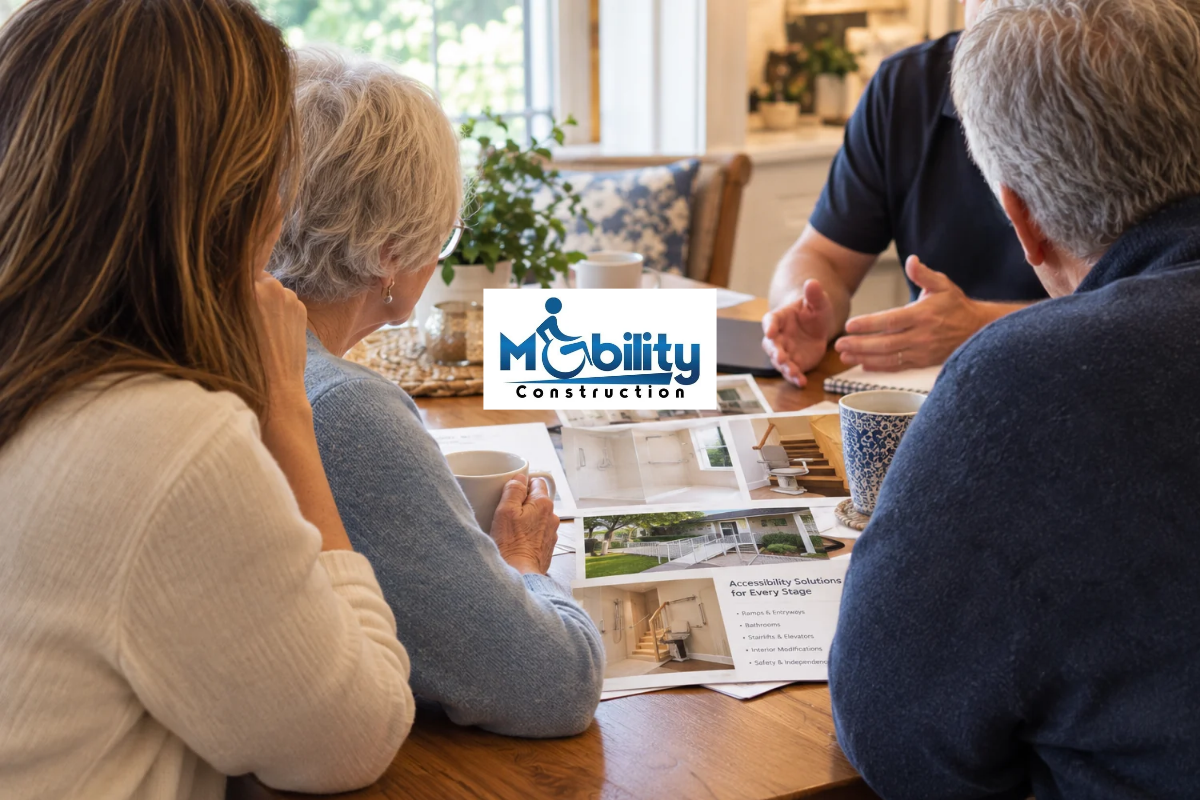
Sometimes the most important home improvement begins with a conversation around the kitchen table.
Don't wait for a wake-up call to start planning.
Contact Mobility Construction to discuss your accessibility needs, explore your options, and take the first step toward a home that works for you today and tomorrow.