
Home Accessibility and Aging in Place: The ABCs of Home Safety
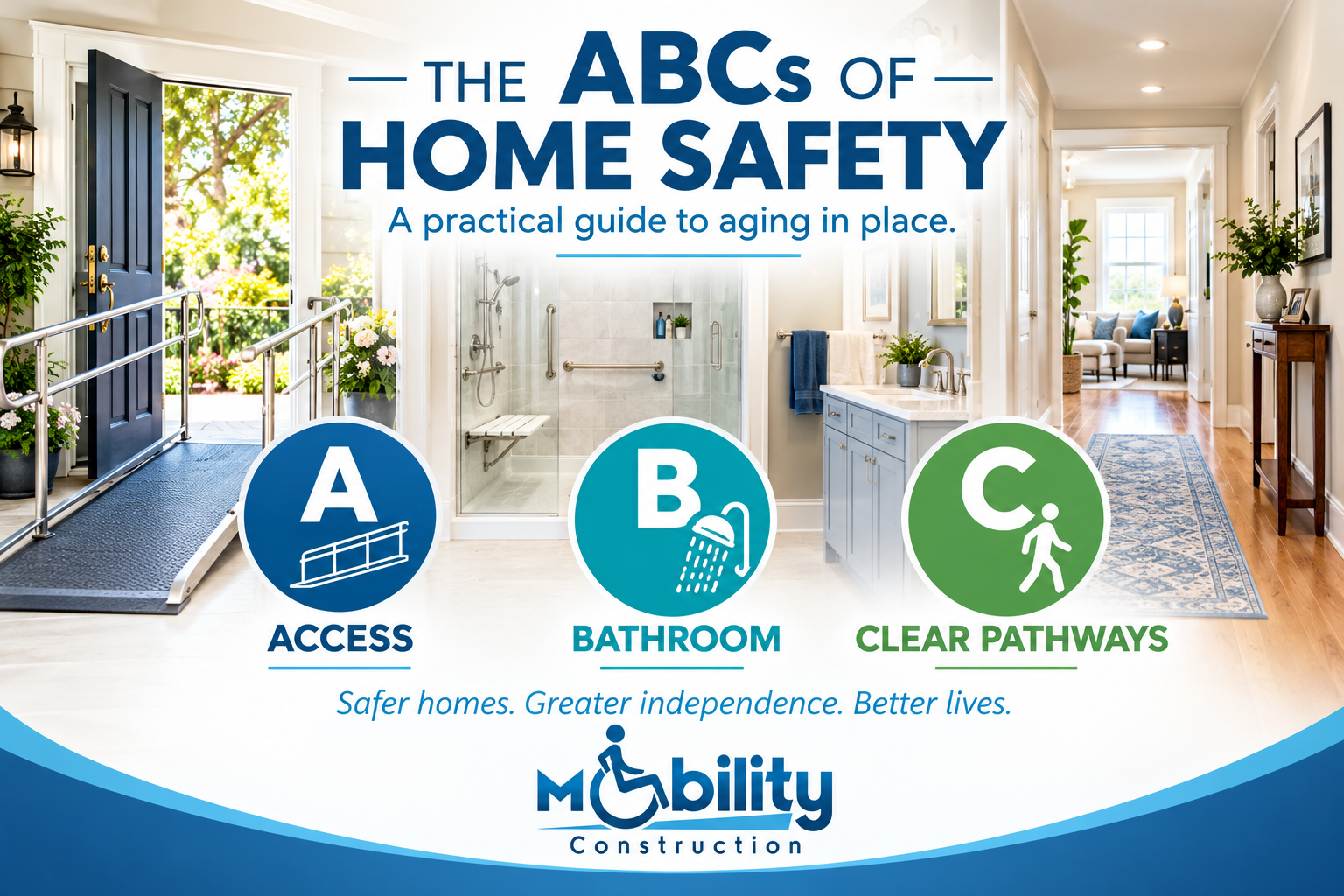
A practical guide for older adults, caregivers, families, and health professionals
Aging in place means more than staying in the home you love. It means being able to live there safely, comfortably, and as independently as possible as your needs change.
A few thoughtful home modifications can make everyday activities easier, reduce potential safety risks, and help a home adapt to changing mobility needs.
The key is to look at the home through a different lens:
What works well today and what could become a challenge tomorrow?
Use these ABCs as a starting point for evaluating home accessibility.
A is for Access
A safe, accessible home should make it possible to get in, out, and around the house safely.
Look at:
Entryways: Are there steps, uneven surfaces, or narrow areas that make entering difficult?
Ramps: Would a properly designed ramp improve access for someone using a wheelchair, walker, or other mobility device?
Doorways: Is there enough clearance for mobility equipment?
Hallways: Are pathways wide and free of obstacles?
Stairs: Are handrails easy to grip? Would a stairlift or other solution make another floor more accessible?
Floor transitions: Could thresholds or changes in flooring create a tripping hazard?
Accessibility isn't just about wheelchairs. A home may need to accommodate a cane, walker, wheelchair, stairlift, or other mobility equipment as needs change.
B is for Bathroom Safety
Bathrooms deserve special attention because they involve wet surfaces, stepping, standing, sitting, and transferring.
Potential modifications include:
Properly installed grab bars
Walk-in or roll-in showers
Handheld showerheads
Shower seats or built-in benches
Comfort-height toilets
Improved lighting
Non-slip flooring
Appropriate clearance around fixtures
Grab bars should be securely anchored and installed in the right locations. A towel bar is not a substitute for a grab bar.
The right bathroom modifications depend on the individual's height, mobility, balance, and daily routine.
C is for Clear Pathways
Sometimes one of the simplest ways to improve home safety is to create more room to move.
Look for:
Loose rugs and runners
Electrical cords across walkways
Shoes, baskets, or other items on the floor
Furniture that narrows pathways
Clutter on stairs
Frequently used items that are difficult to reach
Ask:
Can this person move through the home safely without having to navigate around obstacles?
Clear pathways are especially important when someone uses a walker or wheelchair.
D is for Design for the Individual
There is no one-size-fits-all approach to aging in place.
The right home modification depends on the person's mobility, strength, balance, vision, routines, and the layout of the home.
Instead of asking:
"What modification should we install?"
Start with:
"What is this person having difficulty doing?"
That shift can lead to a more appropriate and practical solution.
E is for Everyday Activities
Home accessibility isn't only about preventing falls. It's about making everyday life easier.
Consider activities such as:
Getting out of bed
Getting dressed
Preparing meals
Using the bathroom
Getting in and out of the shower
Navigating stairs
Entering and exiting the home
Moving from room to room
Doing laundry
Enjoying time with family and friends
When an everyday activity becomes difficult or unsafe, it may be time to consider whether the home needs to adapt.
F is for Future Planning
The best time to think about home modifications is often before a crisis occurs.
A fall, hospitalization, injury, or sudden change in mobility can force families to make decisions quickly. Planning ahead gives everyone more time to consider options and prioritize what matters most.
Ask:
What might become difficult if mobility changes over the next few years?
A home accessibility evaluation can help identify potential challenges before they become urgent problems.
G is for Getting Professional Guidance
When mobility or independence changes, a professional home accessibility evaluation can provide valuable perspective.
Occupational and physical therapists, healthcare professionals, accessibility specialists, and experienced contractors can each contribute different expertise.
A thorough evaluation can help identify barriers, prioritize needs, and determine which modifications may be appropriate.
For more complex projects, professional guidance can also help address permitting, building requirements, structural considerations, and accessibility standards.
H is for Home
At the heart of aging in place is something personal:
Home matters.
It's where routines happen, memories are made, and family gathers.
The goal of home modifications isn't to make a home feel clinical. It's to make the home work better for the person living there—while preserving comfort, dignity, independence, and the feeling of home.
I is for Independence
Independence doesn't necessarily mean doing everything without assistance.
Sometimes independence means being able to do more safely because the environment supports you.
A ramp can make it easier to leave home. A stairlift can improve access between floors. A roll-in shower can make bathing safer and easier. A thoughtfully modified kitchen can make meal preparation more manageable.
The right modification can turn:
"I can't do that anymore."
into:
"I can do that."
J is for Just Start Somewhere
You don't have to evaluate the entire house at once.
Start with the area where there is already a concern.
Is the bathroom becoming difficult? Start there.
Are stairs a challenge? Focus on access between floors.
Is getting in and out of the house difficult? Evaluate the entrance.
A professional home accessibility evaluation can help determine what needs attention now and what can wait.
The Bottom Line: Make Home Work for What's Next
Aging in place isn't about predicting exactly what the future will look like. It's about creating a home that can adapt as life changes.
For older adults, that can mean greater independence. For caregivers and families, it can mean greater confidence in the safety and functionality of the home. For health professionals, it can mean helping clients address environmental barriers that affect daily life.
The best home modifications aren't simply about construction. They're about helping people continue to live their lives in the place they call home.
Is Your Home Ready for What's Next?
If you or someone you support is having difficulty navigating the home, don't wait for a fall or crisis to start the conversation.
Mobility Construction provides home accessibility evaluations to identify barriers, prioritize needs, and explore practical solutions, from ramps and stairlifts to bathroom modifications and other accessibility improvements.
Our Mobility Approach starts with understanding the person, the home, and what needs to work better.
Ready to take the first step? Contact Mobility Construction to schedule a home accessibility evaluation and start planning for a safer, more accessible home.